Loading the homepage
Blog/Account growth
How to warm up a TikTok account.
New accounts get extra scrutiny for a real, documented reason. Here's what TikTok actually says about it, what's just shadowban folklore, and the warm-up schedule that gets you past 0 views.
RP
Rhea Park
TikTok growth lead, Deeporax
Reviewed by Deeporax Team, Editorial review
Published Jun 22, 2026 · Updated Jul 25, 202619 min read · fact-checked

Key takeaways
- 0 views on a new account is usually a cold-start and scrutiny problem, not a punishment. TikTok has never used the word "shadowban" in any of its own documentation.
- TikTok's documented enforcement runs on strikes that expire after 90 days, not a vague permanent penalty. Check Account Status before assuming the worst.
- A slow, passive browsing period before your first post gives the algorithm real interaction data to learn from, which is exactly what a cold account is missing.
- Posting velocity matters less as a raw number and more through the indirect signals it creates, like a burst of low-effort posts training viewers to tap "not interested."
- Bots, bought engagement, and engagement pods aren't shortcuts around warming. They create the exact policy violations this guide is meant to help you avoid.
What "warming up" a TikTok account actually means.
A brand-new TikTok account with a genuinely good first video and no warm-up period will, more often than not, land somewhere under 50 views. Not because the content is bad. Because the account looks, to TikTok's systems, a lot like the accounts spam networks create by the truckload, and TikTok has reported removing tens of millions of fake accounts in a single quarter (TechCrunch, 2022; TikTok Safety Transparency Center). "Warming up" an account is the practice of giving TikTok time to tell the difference between the two before you start posting content you actually care about.
Concretely, warming up means using a new account the way an ordinary viewer would for several days before your first post: scrolling, watching, liking, following, and searching, all inside the niche you plan to create in, with no posting at all. It sounds almost too simple to count as a real strategy. It works anyway, and TikTok's own documentation on how the For You feed gets built explains why. The recommendation system leans heavily on your interactions and comparatively little on device or account settings (TikTok Newsroom, How TikTok recommends videos #ForYou). An account with no interaction history gives the system nothing reliable to work from, and a system with nothing to work from tends to default to caution, not generosity.
This guide covers what actually happens to new accounts on TikTok, separates what TikTok documents from what is creator folklore, and lays out a warm-up schedule you can start this week. It also covers how to tell whether an existing account is genuinely suppressed rather than just unlucky, and what an honest recovery plan looks like. None of it involves bots, purchased engagement, or workarounds that violate TikTok's terms. Those shortcuts tend to create the exact problem this guide is trying to help you avoid, on top of a documented policy violation.
Why brand-new accounts get 0 views.
Zero views is rarely the algorithm punishing you. It's usually the algorithm not knowing what to do with you yet, and there's a real mechanical reason for that, not a mysterious one.
TikTok has publicly described how the For You feed gets assembled: video information, your interactions, and device or account settings all feed a ranking system that improves as it learns from your behavior (TikTok Newsroom, How TikTok recommends videos #ForYou). A brand-new account has almost no interaction history to learn from. New users are prompted to pick a few interest categories at signup, and TikTok has said directly that skipping this step, or having little else to go on, means you're served a generalized feed of popular content while the system watches how you react to it. That's the input side. The output side, what happens to your own first posts, works in reverse: your first videos get shown to a small test audience, and the system reads what that group does with it, completion rate, replays, shares, before deciding whether to push it further.
Creators consistently report that a first video or two lands under 50 views regardless of quality, and performance either climbs or stalls from there depending on what that small test batch did. TikTok hasn't published an exact size for that initial test pool, so treat any specific number you see quoted (200 views, 500 views, whatever) as a widely repeated creator estimate, not a documented threshold. What is documented is the general shape of it: the system tests before it distributes broadly, on every account, every time (TikTok Newsroom, How TikTok recommends videos #ForYou).
Layered on top of that cold-start problem is a second, separate mechanism: new accounts and unfamiliar content patterns get extra scrutiny. TikTok's Community Guidelines describe content being made deliberately ineligible for the For You feed, and enforcement leans more heavily on automated review where an account or pattern looks unfamiliar or risky (TikTok Community Guidelines, Accounts and Features). Independent trackers commonly describe a review window on a new account's first handful of posts, sometimes framed as 24 to 72 hours, though TikTok doesn't publish a fixed number of videos or hours this applies to. Treat that specific figure as a pattern creators report, not a stated rule.
Put those two effects together, a cold recommendation system plus extra scrutiny on unfamiliar accounts, and 0 views on day one stops looking mysterious. It's closer to the default state of a system built to be conservative about accounts it doesn't recognize yet, not a verdict on your content.
Shadowban myths versus what TikTok actually documents.
"Shadowban" is not a word TikTok uses. It never has, in any Newsroom post, support article, or Community Guidelines page. What TikTok documents instead is more specific, and honestly less mysterious: certain content and accounts get made ineligible for the For You feed, sometimes with a notice, sometimes without one, and the stated reasons are tied to policy violations or manipulation, not vibes (TikTok Community Guidelines, For You Feed standards; TikTok Newsroom, account enforcement system).
Here is what's actually documented. TikTok runs a strikes-based enforcement system: a first violation typically produces a warning, further violations in the same policy area or product feature accumulate strikes, and strikes expire from an account's record after 90 days if no new violations occur (TikTok Newsroom, Supporting creators with an updated account enforcement system). TikTok has also said that in its own review of banned accounts, close to 90 percent had repeatedly violated using the same feature, and more than three-quarters had repeated violations within the same policy category, part of why the current system counts strikes per feature and per policy rather than as one global tally. Separately, TikTok's Community Guidelines name specific behavior, fake engagement, follow-for-follow schemes, artificially inflating metrics, as violations of its integrity and authenticity standards that can make content or accounts ineligible for recommendation (TikTok Community Guidelines, Accounts and Features; Integrity and Authenticity policy).
Strikes will expire from an account's record after 90 days.
TikTok Newsroom, Supporting creators with an updated account enforcement system
None of that is folklore. It's published policy, and it explains a meaningful share of what creators call a shadowban: a real, documented reduction in reach tied to a real, documented cause.
Here's what isn't documented, and gets repeated as fact anyway across creator forums and growth-hacking blogs: that posting at a specific hour trips a penalty, that using certain hashtags a fixed number of times triggers review, that deleting and reposting a flagged video resets anything (creators who try this often report the opposite, a second review stacked on the first), that a precise number like exactly 1,000 or exactly 10,000 views is some hidden ceiling you need an unlock to cross, or that switching to a Business account always tanks reach. Some of these have a kernel of a real mechanism buried under a wildly overstated claim. Most of them are pattern-matching on noisy data: a creator has a bad week, looks for something they did differently, and turns a coincidence into a rule that spreads.
The practical filter worth applying to any shadowban advice you read: does it cite something TikTok has actually published, a Community Guidelines page, a Newsroom post, a Creator Academy article, or does it cite another creator's anecdote? Anecdotes aren't worthless. They're often the earliest signal of a real pattern before TikTok documents it. But they shouldn't carry the same confidence as a policy page, and a lot of shadowban content online blurs that line on purpose, because certainty sells better than nuance.
Device and network fingerprinting: what's real, what's exaggerated.
A specific version of shadowban folklore deserves its own section, because it comes up constantly among people running more than one TikTok account: the idea that TikTok fingerprints your phone and quietly links every account that's ever touched it.
The underlying technology is real and not TikTok-specific. Device fingerprinting is a standard fraud-prevention technique used across nearly every major app and platform: hardware details, OS version, screen resolution, installed fonts, and dozens of smaller signals combine into an identifier that doesn't rely on cookies or logins, which is exactly why it's useful for catching bot networks and ban evasion in the first place (Fingerprint.com, Device Fingerprinting: What It Is, How It Works). TikTok's own writing on countering deceptive behavior confirms that it actively works to detect and act on ban evasion and coordinated inauthentic accounts, without publishing the specific technical mechanics of how (TikTok Newsroom, How TikTok counters deceptive behaviour; TikTok Community Guidelines, Integrity and Authenticity). That distinction matters: TikTok has never published a device-fingerprinting spec, an IP-linking threshold, or an official "this many accounts per device" rule. Everything more specific than "we detect and act on ban evasion," including in this section, is a synthesis of what creators and account managers report seeing, not a confirmed TikTok mechanism.
With that caveat stated clearly: here's the pattern that shows up consistently enough across creator reports to be worth taking seriously. Logging many new accounts in and out of the same device and network in a short window, especially right after one of those accounts gets restricted, correlates with the new accounts starting out restricted too. Creators and agencies describe this as "linkage," TikTok treating a device and network as one unit and extending scrutiny across every account that touches it, rather than punishing device or network sharing on its own.
What this means practically, and what it doesn't. It does not mean an ordinary person with one personal TikTok who starts a second account on the same phone is at meaningful risk. TikTok's own account switcher supports multiple logged-in accounts on one device by design, which would be an odd feature to ship if simply having two accounts on a phone were treated as a violation. The risk pattern creators describe is specifically about accounts created in bulk, on a device or network already tied to a ban, or set up in a way that mimics automated account farming. It's also worth stating plainly: none of this is a reason to use device-spoofing tools, proxy farms, or "device warming" services marketed for ban evasion. Those tools exist specifically to defeat the detection described in this section, they sit squarely inside what TikTok's Terms of Service and integrity policy define as manipulation, and using them puts every account involved at more risk, not less.
Posting velocity: how many times a day is too many.
How often you post interacts with warming in a way that's easy to get backwards: post too fast on a cold account and you look automated, post too cautiously forever and you never generate enough data for the system to learn your niche.
TikTok's Creator Academy publishes cadence guidance for creators, framed as general best practice rather than a hard technical limit, and it treats consistency and quality as mattering more than hitting an exact number (TikTok Creator Academy, Posting cadence best practices for publishers). Independent creator trackers commonly cite somewhere around four to five posts a day as the point where reach on a new or already-fragile account tends to visibly decline, though that specific figure comes from aggregated creator observation, not a number TikTok has published, and it clearly varies by niche, format, and how repetitive the posts are.
The more useful nuance for a warming account specifically is that TikTok evaluates each video's distribution largely on its own merits, rather than punishing an account outright just for posting a high volume in one day. What actually hurts reach on a fast-posting new account is usually indirect. Repetitive, low-effort content trains viewers to tap "not interested," and that specific negative signal is exactly the kind of interaction data the recommendation system is built to act on quickly. A burst of five near-identical, low-effort posts on day one of a cold account can generate more negative signal in an afternoon than a slow account generates in a week.
That's why the schedule in the next section starts at zero posts, holds at once a day for a stretch, and only increases once a day's views stop declining. It isn't a magic cadence number. It's giving each post enough isolated data before adding another one into the mix, so a bad signal on post two doesn't get buried under posts three, four, and five before you've had a chance to notice and adjust.
One more point worth being direct about: pausing entirely for a few days after you've started posting is not itself a violation and doesn't reset anything documented. But it does mean less interaction data for the system to learn from, which is the opposite of what warming is trying to accomplish. Consistency, even a modest one post a day, teaches the system faster than sporadic bursts followed by silence.
The day-by-day warm-up schedule.
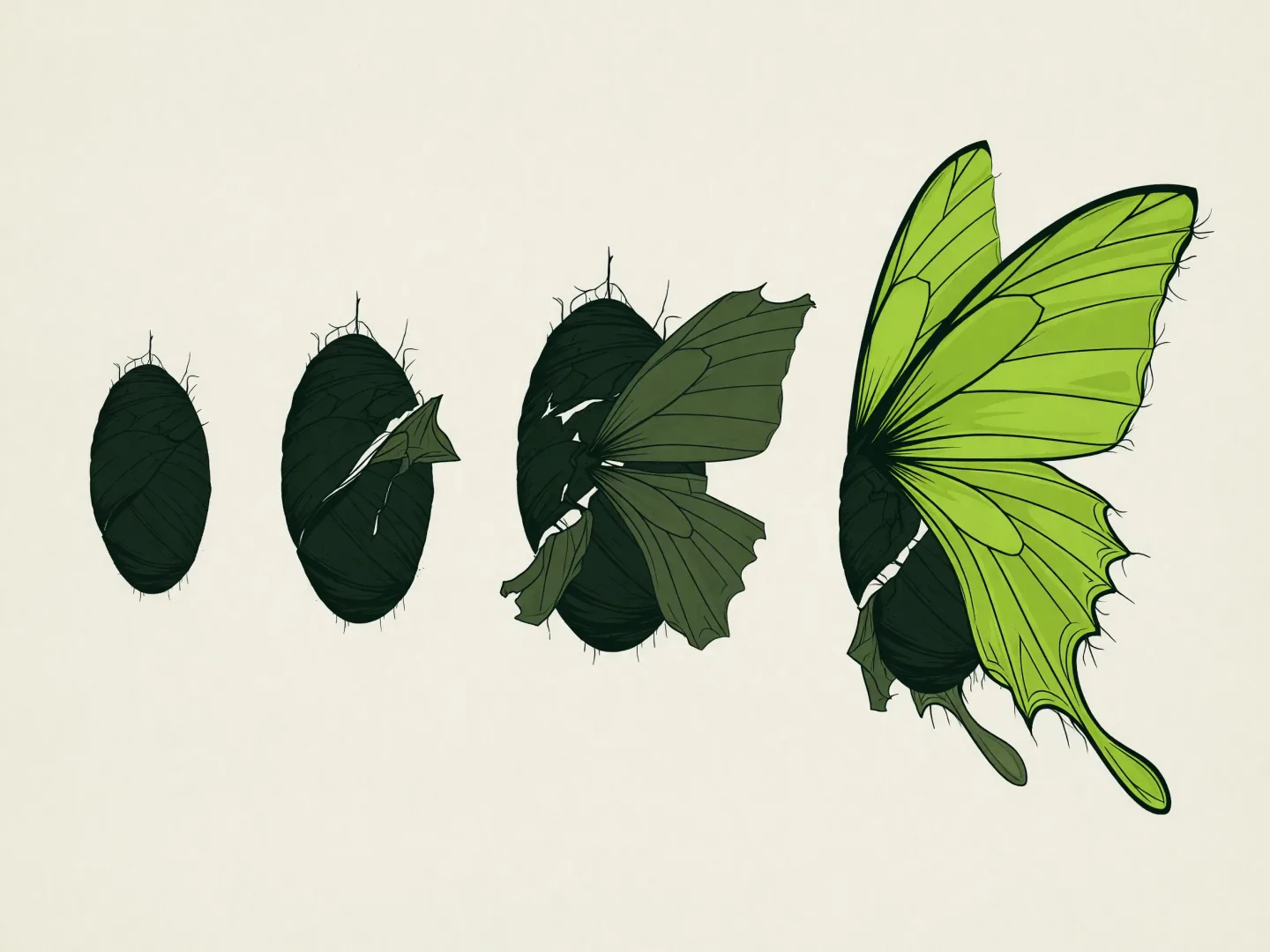
None of the reasoning above is useful without a schedule to actually run. What follows synthesizes the warming approach that shows up consistently across creator and agency guides for new accounts, adapted into a day-by-day plan (Reel Farm, How to Warm Up a TikTok Account; Geelark, How to Warm Up TikTok Accounts; Superscale, How to Warm Up a New TikTok or Instagram Account). Treat the day counts as a sensible default, not a rule TikTok enforces. An account that's clearly climbing on day 4 of pure browsing doesn't need to force itself to wait until day 7 to post, and one that still looks cold on day 7 shouldn't rush it just to stay on schedule.
| Day | Focus | What to do | Post today? |
|---|---|---|---|
| Day 1 | Setup and signals | Complete the profile, pick a niche-relevant username and bio, select interest categories at signup if prompted | No |
| Day 2 | Passive browsing | Scroll the For You feed 20-30 minutes; let some videos play to completion, skip others quickly, mix it up | No |
| Day 3 | Niche browsing | Search niche keywords and hashtags; like and follow 10-15 accounts inside that niche | No |
| Day 4 | Deepen the signal | Repeat day 3's browsing; add a few saves and comments on videos close to what you plan to make | No |
| Day 5 | Check the signal | Confirm the For You feed is now mostly showing your niche back to you; that's the sign the account is warm | No |
| Day 6 | Optional buffer | If the feed still looks generic, keep browsing; it's better to wait an extra day than post cold | No |
| Day 7 | First post | Post one video that matches the niche you've been browsing, then stop for the day | Yes, 1x |
| Day 8 | Hold | Post once; check yesterday's views before deciding whether to add a second post today | Yes, 1x |
| Days 9-10 | Hold | Continue at 1x daily; only increase once views from the last two posts are flat or climbing, not falling | Yes, 1x |
| Days 11-13 | Ramp, if stable | Move to 2x daily only if the last few posts held steady or grew | Yes, up to 2x |
| Day 14 onward | Scale carefully | Increase toward 3-4x daily only if reach keeps holding; drop back to 1x for a few days if any post underperforms sharply | Yes, up to 3-4x |
Synthesized from creator and agency warm-up guides (Reel Farm, Geelark, Superscale, 2026). Day counts are a practical default, not a TikTok-published rule.
The one rule underneath every row: react to what the account is actually doing, not to the calendar. A cold-looking feed on day 5 is a reason to keep browsing, not a reason to panic-post to "see what happens." A string of flat or climbing posts is the reason to add a second post a day, not a fixed date on this table.
How to diagnose a suppressed account.
Not every slow account is suppressed, and not every suppressed account looks the same. Before assuming the worst, separate what you're actually seeing into a specific symptom, because the right fix depends on which one applies.
| Symptom | Likely cause | What to do |
|---|---|---|
| Every post has stayed under 50-100 views since account creation | Cold start, normal for the first 1-2 weeks without a warm-up period | Run the warm-up schedule above before posting again; resist the urge to post more to compensate |
| Views dropped sharply after a run of normal performance | A specific post tripped a policy or originality flag, or a burst of low-quality posts trained the algorithm toward "not interested" | Check notifications for a strike or ineligibility notice on a specific video, and audit the last 5-10 posts for repetitive or low-effort patterns |
| "Not eligible for For You feed" notice on one video | That specific post was flagged, not the whole account | Read the stated reason if one is given, adjust future posts to avoid it, and use TikTok's in-app appeal if you believe it's a mistake |
| Account-wide restriction (posting, commenting, or LIVE disabled) | A strike threshold was reached in a specific policy area | Open Account Status in Settings and Privacy to see the specific restriction and its stated duration, then appeal if you believe it's mistaken |
| Views are steady but growth has flatlined for weeks | Often a content or hook problem, not a suppression problem at all | Test new hooks and formats before assuming suppression; a library like our slideshow hook ideas guide is a reasonable place to start |
| You just switched devices, networks, or logged several accounts in back to back | Community-reported device and network linkage scrutiny, unconfirmed in TikTok's own documentation | Give the account normal, unhurried usage for several days rather than logging accounts in and out rapidly |
How to recover a suppressed account.
Recovery starts with reading whatever TikTok actually told you, a step a lot of creators skip in the rush to fix things. Open Account Status in Settings and Privacy. If there's an active strike or restriction, it will name the policy area and, often, a duration or an appeal option. That single screen tells you more than any outside guide can, because it's the one place TikTok states its own reasoning for your specific account.
If the account has a specific strike or a removed video, appeal through the in-app flow if you genuinely believe the action was a mistake. TikTok's Creator Academy documentation on moderation status describes appeals as a normal, expected part of the enforcement system, not a last resort (TikTok Creator Academy, Guidelines, moderation status and appeals). Straightforward appeals are commonly resolved within a few days; more complex reviews can take longer. Filing an appeal you know is bogus, hoping to game the review queue, wastes the one channel that actually works when you have a legitimate case.
I stopped panicking every time a post underperformed and started checking Account Status first. Half the time there was no strike at all, just a slow week.
morgan, Deeporax user
If there's no specific strike, just an account that's gone quiet, the fix looks almost identical to warming a brand-new account, with one difference: slow down harder than you think you need to. Stop posting for three to five days. Use the account passively, the same browsing, liking, and niche-following described in the warm-up schedule. Then resume at once a day, and hold there longer than you would on a fresh account, since the goal is proving the account is back to normal behavior, not just active again. If a post underperforms sharply during this stretch, drop back to zero for a day or two rather than pushing through it.
One thing worth saying directly, because it gets recommended constantly in comment sections: deleting the account and starting over is rarely the right move for a temporary restriction. A new account restarts the entire cold-start problem from zero, and it's genuinely unclear from TikTok's own documentation whether an account deleted and quickly replaced from the same device carries any of the scrutiny that follows repeat ban evasion, since TikTok hasn't published specifics there either. Starting over is sometimes the right call for an account with a severe, permanent violation attached to it, since no amount of warming fixes that. It's close to never the right call for ordinary suppressed reach.
What not to do: the shortcuts that violate TikTok's terms.
Warming up an account and fixing a suppressed one both tempt people toward shortcuts, and it's worth being specific about which ones actually violate TikTok's terms, because a few of them get recommended casually in growth forums as if they were harmless.
Buying followers, likes, views, or comments goes against TikTok's Community Guidelines and Terms of Service. TikTok's integrity and authenticity policy names artificially inflating engagement metrics, including paid follower and like services, as a violation, and accounts caught doing it risk the exact kind of restriction this guide is trying to help you recover from (TikTok Community Guidelines, Integrity and Authenticity; TikTok Terms of Service). Engagement pods, groups of creators who mutually like and comment on each other's posts on a schedule to game early engagement signals, sit in the same category. They can be harder to spot than an obvious bought-follower package, but TikTok's systems are built to catch patterns of coordinated, non-organic engagement, not just individual bad actors.
Bot-driven engagement or auto-liking and auto-following software is a more direct version of the same problem, and it's specifically named in TikTok's policy language around fake engagement and spam. It's also, in practice, one of the more detectable patterns, since bot behavior tends to move faster and more uniformly than a real person browsing.
Creating throwaway accounts to fake initial traction, sometimes called seeding, or running device farms and proxy setups to make a cluster of accounts look like independent, organic users, both fall under what TikTok's policy on deceptive behavior and ban evasion is specifically designed to catch (TikTok Newsroom, How TikTok counters deceptive behaviour). None of these tactics solve the actual problem a new account has, which is a lack of real interaction data. They just add a different, more serious problem on top of it: a documented, enforceable policy violation, on the record, in a way a slow week of low organic views never was.
A realistic timeline: what to expect after warming.
It's worth setting expectations honestly, since a lot of frustration with warming comes from expecting it to work faster than it actually does.
Week one is passive: no posts, just normal usage teaching the algorithm what the account is about. Week two is where the first posts go up, at a slow, steady cadence, and where views are genuinely unpredictable. Some accounts see steady small numbers, some see one post catch a bigger test batch and jump. Neither pattern early in week two tells you much on its own; it's the trend across several posts that matters, not any single one. By week three or four, an account that's been warmed properly and posted consistently typically shows a clearer pattern, either climbing steadily or plainly stuck, and a stuck pattern at that point is worth treating as a content and hook problem rather than an account problem, since the warming variable has mostly played out by then.
None of this guarantees virality, and nothing here is designed to produce one. Warming doesn't make content good. It removes one specific, common obstacle, an account that looks automated to a system built to be suspicious of automation, so that whatever you post actually gets a fair first look.
This is also where a lot of pages hand off to automation. Once an account is warm and the posting rhythm is proven out, keeping that rhythm consistent by hand every day is the next hard part. That's the specific gap Deeporax is built for: scheduling and publishing slideshow posts on a steady cadence once your account is past the warming stage, so the consistency this guide depends on doesn't rely on remembering to open the app at the same time every day. Our guide on how to automate TikTok slideshows with AI covers that full pipeline end to end, and a rotating pool from our slideshow hook ideas library keeps those first weeks of posts from feeling repetitive right when the account can least afford to look automated.
Frequently asked questions.
What does it mean to "warm up" a TikTok account?+
It means using a new account like a normal viewer, scrolling, watching, liking, and following inside your niche, for several days before posting anything. That gives TikTok's recommendation system real interaction data to work with instead of nothing, which is what makes a brand-new, silent account look risky by default.
How long does warming up a TikTok account take?+
A common default is 5-7 days of passive browsing before the first post, then a slow posting ramp over the following one to two weeks. TikTok doesn't publish an exact number, so treat this as a practical starting point and adjust based on whether your feed has actually narrowed to your niche yet.
Do I really need to warm up a TikTok account before posting?+
It's not a hard TikTok requirement, but it's a well-supported practice for avoiding the cold-start problem new accounts face. Posting immediately on a fresh account isn't against the rules, it just means the algorithm has less to go on, which often shows up as unusually low early views.
Is a TikTok shadowban real?+
TikTok has never used the word "shadowban" in any of its own documentation. What is real and documented is that TikTok can make specific content or accounts ineligible for the For You feed for policy violations, and that strikes accumulate and expire after 90 days. The reduced reach creators describe is real; the exact mechanics people attach to the word "shadowban" are often exaggerated or invented.
Why did my first TikTok video get 0 views?+
Almost always because the account was cold: no interaction history for the algorithm to learn from, plus extra scrutiny that new accounts and unfamiliar posting patterns tend to get. It's rarely a sign the specific video was bad.
How many days should I browse before my first post?+
5-7 days is a reasonable default, but the better signal is your own For You feed. Once it's showing mostly content in your niche back to you, that's a sign the account has enough signal to post into. If it still looks generic on day 7, an extra day or two of browsing is a low-cost choice.
How many times a day should I post while warming up an account?+
Start at once a day and hold there until views across your last two or three posts are flat or climbing, not falling. Only then move to twice a day. Posting five or more times a day on a brand-new account is where creators most often report reach starting to decline, though that specific number is a creator-reported pattern, not a published TikTok limit.
Can I warm up multiple TikTok accounts on the same phone?+
TikTok's own account switcher supports multiple logged-in accounts per device, so this isn't a violation by itself. The pattern creators associate with risk is specifically bulk account creation, or logging accounts in and out rapidly on a device already tied to a ban, not ordinary multi-account use.
Should I fill out my profile before or during the warm-up period?+
Before. Set your username, bio, and profile photo on day one, then move into passive browsing. A complete profile is part of looking like a normal account from the start, rather than something to patch in later.
What should I actually do during the browsing phase, specifically?+
Scroll the For You feed for 20-30 minutes a day, let some videos play to completion and skip others quickly, search your niche's keywords and hashtags, and like and follow 10-15 accounts in that space. The goal is generating a realistic, varied interaction pattern, not performing a checklist.
My account already has 0 views. Can I recover it, or should I start over?+
In most cases, recover it rather than starting over. Check Account Status first for any specific strike, then pause posting for a few days, warm the account again with normal browsing, and resume slowly at once a day. A new account restarts the entire cold-start problem from zero, so it's rarely the faster path unless the existing account has a severe, permanent violation attached to it.
How do I know if my account is suppressed versus just not resonating yet?+
Suppression usually comes with a specific signal: a strike or restriction notice in Account Status, or an "ineligible for recommendation" flag on a video. If there's no such notice and views are steady but growth has flatlined, that's more often a content and hook problem than an account problem.
I got a "not eligible for For You feed" notice. What does that actually mean?+
It means that specific post was evaluated and excluded from broader distribution, usually for a stated policy or quality reason. It's about that video, not necessarily your whole account. Read the given reason, adjust future posts accordingly, and use the in-app appeal if you believe it was applied in error.
Does deleting and reposting a flagged video fix anything?+
There's no documentation from TikTok saying this resolves anything, and creators who try it often report the opposite, a second review stacked on top of the first. It's better to read the stated reason for the flag, if one is given, and adjust the next post instead of re-uploading the same one.
Will using a VPN or new device help fix a suppressed account?+
There's no TikTok documentation suggesting this helps, and switching devices or networks right after a restriction is one of the patterns community reports associate with extended scrutiny rather than relief. The better move is normal, unhurried use of the existing account and device while the restriction plays out or an appeal is reviewed.
Sources.
- TikTok Newsroom: How TikTok recommends videos #ForYou
- TikTok Safety: Making your feed For You (Tools & Guides)
- TikTok Community Guidelines: Accounts and Features
- TikTok Community Guidelines: For You Feed (FYF) standards
- TikTok Community Guidelines: Integrity and Authenticity
- TikTok Newsroom: How TikTok counters deceptive behaviour
- TikTok Newsroom: Supporting creators with an updated account enforcement system
- TikTok Safety: Community Guidelines Enforcement Report (Transparency Center)
- TikTok Creator Academy: Posting cadence best practices for publishers
- TikTok Creator Academy: Guidelines, moderation status, and appeals
- TikTok Support: Content violations and bans
- TikTok Terms of Service
- TechCrunch: TikTok says fake account removal increased 61% to 33.6M in Q2 2022
- Statista: Number of fake interactions removed by TikTok
- Fingerprint.com: Device Fingerprinting: What It Is, How It Works + Examples
- Search Engine Land: How the TikTok algorithm works
- Hootsuite: How the TikTok algorithm works in 2026
- 4Seller: TikTok 0 Views: 9 Common Reasons & How to Fix
- Reel Farm: How to Warm Up a TikTok Account (Exact Schedule + 0-View Fix)
- Geelark: How to Warm Up TikTok Accounts: A Complete Guide
- Superscale: How to Warm Up a New TikTok or Instagram Account
RP
Written by
Rhea Park
Leads growth experiments at Deeporax. Focused on account warming, TikTok search ranking, and the unglamorous mechanics of getting a new page past 0 views.